
How to Build a Practical Learning Routine
A realistic learning routine does not need five free hours a day. It needs a repeatable schedule and enough practice to turn lessons into usable skills.
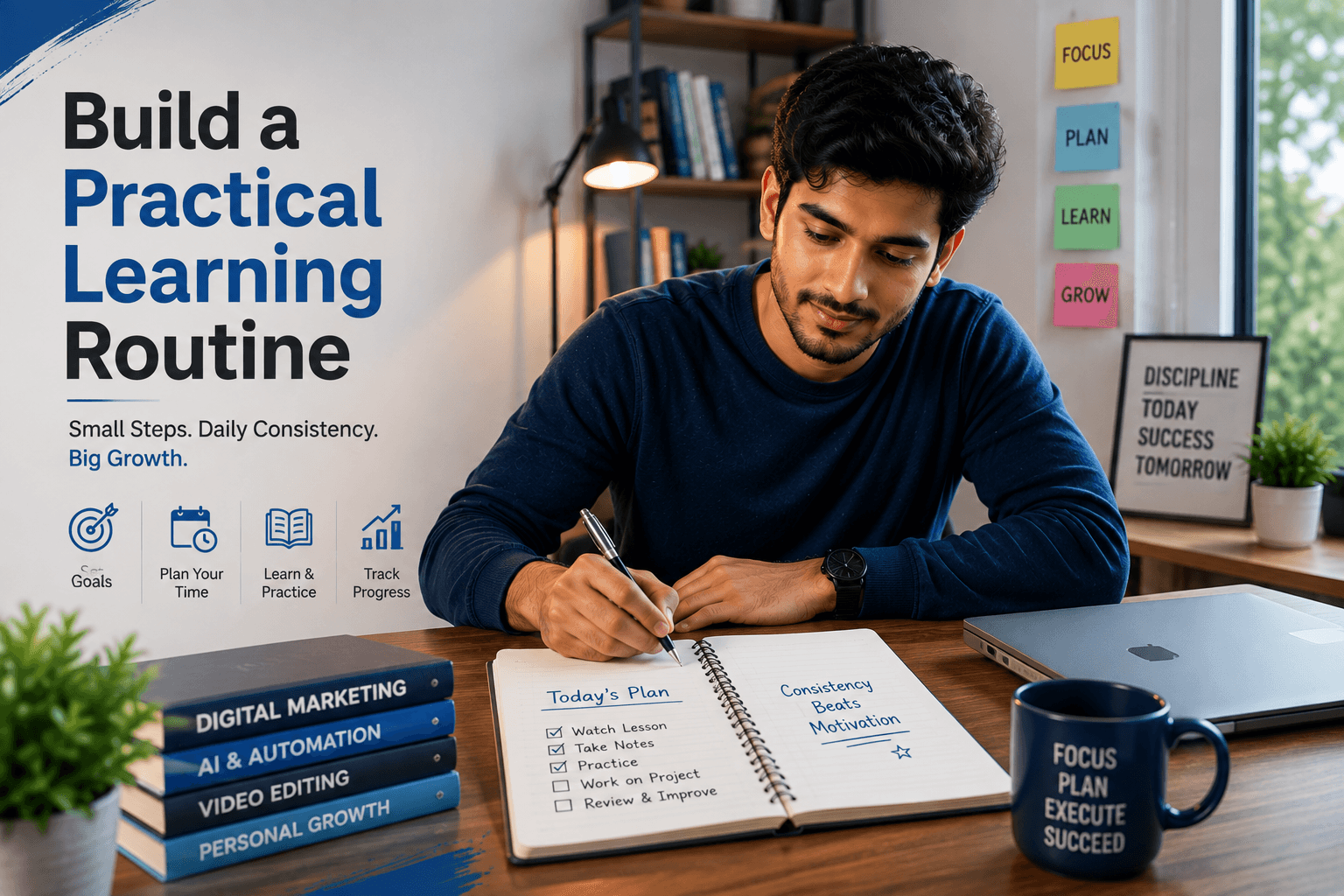
People often build learning plans for an imaginary version of their life.
The plan says:
Then work becomes busy, family needs attention or energy drops.
The plan disappears.
A better routine should work on normal days, not only perfect days.
Start With the Time You Actually Have
Do not begin by asking:
> “How much should I study?”
Ask:
> “What time can I realistically protect every week?”
That might be:
- 45 minutes in the morning
- one hour after work
- three fixed evenings
- a longer weekend practice session
Consistency matters more than an impressive schedule that lasts four days.
Separate Learning From Practice
Watching a lesson and doing the skill are different activities.
A useful routine contains both.
For example:
Class day
- Attend the live session
- Write short notes
- Mark questions
Practice day
- Repeat the task yourself
- Make one small output
- Note where you get stuck
This gives the brain a second interaction with the same topic.
Make Small Outputs
Do not wait for one giant final project.
Create small things regularly.
If learning spreadsheets:
- make an expense tracker
If learning Canva:
- create one poster
If learning WordPress:
- build one landing-page section
If learning Meta Ads:
- map a sample campaign structure
If learning AI:
- create and improve one useful prompt workflow
Small outputs prove that you can apply what you learned.
Keep a Question List
When practising, write down the points where you get confused.
Bring those questions to the next live session.
This is much better than forgetting the issue and later saying:
> “I understood the class, but I cannot do it myself.”
Practice reveals the real questions.
Do Not Keep Changing Courses
A common mistake is collecting learning resources instead of learning.
One week it is AI.
Next week it is SEO.
Then editing.
Then automation.
Every subject stays at 20%.
Choose one main learning goal and finish enough of it to build confidence before adding another major subject.
Use Recordings for Revision, Not Delay
When recordings are available, it becomes easy to think:
> “I will watch it later.”
Later keeps moving.
Treat the live class as the main session.
Use the recording when:
- you missed a specific explanation
- you want to repeat a practical step
- you need revision
A recording works better as a backup than as an excuse to postpone.
Create a Weekly Minimum
Set a minimum you can maintain even during a busy week.
Example:
- Attend 3 classes
- Complete 2 practice sessions
- Create 1 small output
- Ask at least 1 question if stuck
Your actual week can be better than the minimum.
The minimum simply stops progress from becoming zero.
Review Every Two Weeks
Ask yourself:
- What can I do now that I could not do two weeks ago?
- What still feels confusing?
- Am I practising enough?
- Do I need to repeat a topic?
- Is this skill still aligned with my goal?
Learning should produce visible changes in what you can do.
Keep It Simple Enough to Continue
The perfect learning system is not the most detailed one.
It is the one you keep using.
A fixed class schedule, regular practice and small practical outputs are enough to create steady progress.
Want help choosing a course?
Tell us your goal and current level and we’ll point you to the right one.
Related reading

How to Choose Your First Digital Skill
The best first skill is not the most popular one. It is the one that moves you toward a clear goal and gives you enough practice to keep going.

What Live Learning Actually Changes
Recorded lessons are convenient, but live learning changes one important thing: you can correct confusion before it becomes a habit.